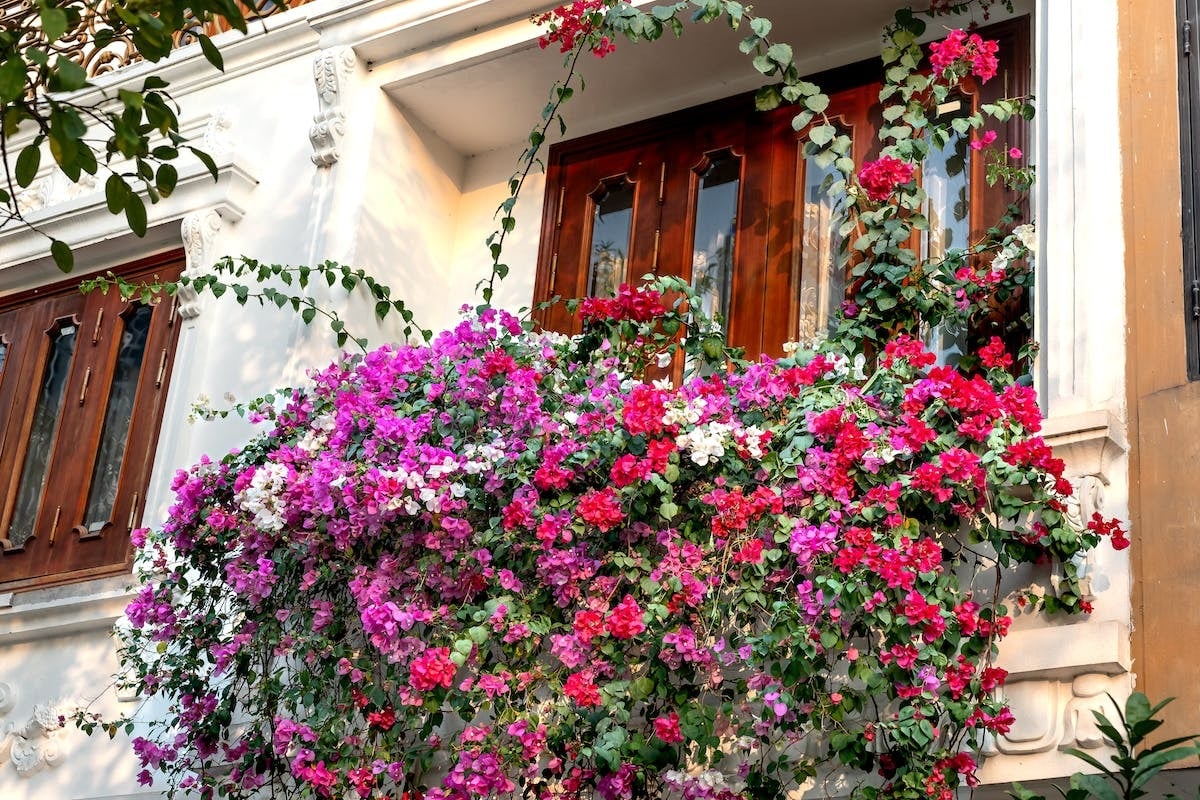
It is entirely possible to create a green haven on your balcony, even if you don’t have a green thumb. Indeed, some plants are particularly hardy and require little maintenance to thrive. Among these, six plants stand out for their exceptional resilience and ability to flourish in pots. These varieties not only offer an explosion of colors and textures but also provide a refreshing touch during hot summers. Here is an overview of these six outdoor plants, which will undoubtedly beautify your balcony and delight your senses.
Potted plants to enhance your balcony
The hardiness of a plant is of utmost importance when it comes to choosing plants for your balcony. Sunlight, shade, wind, and temperature variability are all factors to consider in this decision. Additionally, the size of the pot or planter that will hold each plant is equally crucial.
However, another intriguing way to consider this choice could be related to the analogy: ‘finding a person with their date of birth’. This expression means that each individual has specific and unique characteristics that depend on their ‘birth’, that is, their genetic and environmental origin. Similarly, each plant has its own distinctive traits according to its botanical ‘date of birth’ • its species, natural habitat, and the climatic conditions to which it is adapted.
1) Echinacea purpurea (purple coneflower), ideal for sun-exposed balconies.
2) Fuchsia magellanica (hardy fuchsia), preferring shaded or semi-shaded spots.
3) Lavandula angustifolia (true lavender), fully enjoying the sun.
4) Hedera helix (common ivy), versatile and able to tolerate both full sun and dense shade.
5) Thymus vulgaris (common thyme), requiring plenty of sunlight but also capable of withstanding cold winters.
6) And finally, Uncinia rubra ‘Firedance’, a spectacular grass that requires little maintenance and will add a colorful touch to your outdoor space.
Just remember that, like the process of finding a person with their date of birth to understand their innate and acquired individual characteristics over time; it is also important for each chosen plant to take into account not only the specifics inherent to their species but also their requirements regarding optimal environmental conditions.
Criteria for hardiness when choosing your potted plants
Lavender, this enchanting plant with an intoxicating aroma, is not only hardy but also a true wonder for beautifying your balcony. With its elegant silhouette and delicate flowers, lavender adds a touch of Mediterranean charm to any outdoor space.
Originating from the sunny regions of the Mediterranean basin, lavender has evolved to adapt to the most challenging climatic conditions. This is why it can thrive in hot, dry environments where other plants may struggle. Its ability to withstand intense heat as well as nutrient-poor soils makes it an ideal choice for balconies exposed to full sun.
Beyond its exceptional hardiness, lavender also offers numerous therapeutic benefits. Its soothing fragrance has long been used in aromatherapy to promote relaxation and reduce stress.
Lavender: a fragrant and decorative plant
The oleander, also known by its scientific name Nerium oleander, is a Mediterranean plant that brings a true explosion of colors to your balcony. With its bright and varied flowers ranging from white to bright pink and red, this plant is sure to attract all eyes.
Originating from the coastal Mediterranean regions, the oleander has adapted to the arid and sunny conditions characteristic of these areas. This makes it an ideal option for sun-exposed balconies where few other plants can thrive. Its resistance to intense heat and drought also helps reduce the maintenance required.
Beyond its aesthetic appeal, the oleander also has interesting medicinal properties. Indeed, certain parts of this plant have long been used in traditional medicine for their therapeutic virtues. Studies have shown that some components of the oleander may have antioxidant effects as well as anti-inflammatory actions beneficial to the body.
It should be noted that all parts of the oleander are toxic if ingested. Therefore, be cautious when handling this plant and ensure that your pets are kept out of reach.
To successfully grow an oleander on your balcony, make sure it has a pot large enough to accommodate its root system, which can be quite developed. Choose well-draining potting soil and place it in a sunny position where it can receive at least six hours of sunlight per day.
The oleander is a Mediterranean plant that will bring an explosion of colors to your balcony. Its adaptability to arid and hot conditions makes it an ideal choice for sun-exposed balconies. Keep in mind its potential toxicity and take the necessary precautions when handling it.
The oleander: vibrant flowers for your balcony
Among the hardy outdoor potted plants, we also find boxwood. This evergreen plant with dense foliage is a perfect choice to bring a touch of sophistication and elegance to your balcony.
Boxwood, known by its Latin name Buxus sempervirens, is native to the Mediterranean and European regions. It is characterized by its small, glossy oval leaves that remain dark green all year round. Its slow growth makes it an easy-to-maintain plant, ideal for limited spaces like balconies.
This plant also has the unique ability to be shaped into various decorative forms such as hedges, balls, or topiaries. You can shape your boxwood according to your tastes and give it a unique sculptural appearance.
Beyond its undeniable ornamental aspect, boxwood also offers some practical advantages. Indeed, its well-branched branches create a natural screen that can serve as a privacy barrier on your balcony while preserving your intimacy from prying eyes.
This hardy plant tolerates pruning very well, allowing you to control its growth and give it different geometric or artistic shapes according to your creative desires.
To successfully grow boxwood on your balcony, choose a pot large enough for the roots to develop properly. Opt for well-draining potting soil to avoid any risk of root rot due to excess moisture. Place your boxwood in a sunny or semi-shaded spot, as it tolerates both conditions well.
In terms of maintenance, boxwood is low-maintenance. It requires annual fertilization in spring and regular but moderate watering to keep the soil slightly moist. Also, be sure to monitor for pests such as aphids or powdery mildew that can affect the health of your plant.
Boxwood is an evergreen plant with dense foliage that brings sophistication and elegance to your balcony while offering practical advantages such as a natural privacy screen and the possibility of artistic creation thanks to its easy pruning. Its cultivation requires little effort and is perfectly suited for limited spaces like balconies.
Boxwood: an evergreen plant with dense foliage
Rosemary, this aromatic plant with an intoxicating scent, is a perfectly suitable option to beautify your balcony. Scientifically known as Rosmarinus officinalis, rosemary is native to the Mediterranean regions and is distinguished by its small, dark green evergreen leaves that emit a powerful aroma.
In addition to offering an aesthetic touch with its dense foliage and elegant shape, rosemary also has the advantage of being very resistant to weather and diseases. This plant can withstand prolonged periods of drought as well as extreme temperatures, making it a perfect choice for balconies exposed to scorching sun or strong winds.
Beyond its undeniable decorative aspect, rosemary also possesses remarkable culinary properties. Its aromatic leaves can be used fresh or dried in a variety of dishes such as marinades, sauces, and even desserts. Adding a few sprigs of rosemary to your recipes will bring a unique and subtle flavor to your culinary preparations.
To grow rosemary on your balcony, choose a pot large enough to allow the roots to develop properly. Ensure there is good drainage to avoid stagnant water accumulation that could damage the plant. Place it in a sunny spot where it will receive several hours of direct light each day.
The maintenance of rosemary is relatively simple. It prefers slightly dry, well-drained soil, so it is recommended to water moderately when the soil begins to dry on the surface. Avoid overwatering to prevent root rot issues.
Rosemary can also be pruned regularly to maintain its compact shape and encourage new growth. Feel free to use the cut branches in your culinary recipes or even as a fragrant bouquet in your home.
In summary, rosemary is a hardy aromatic plant that will add an aesthetic and olfactory touch to your balcony. Its evergreen foliage, its ability to withstand difficult conditions, and its culinary properties make it an ideal choice to enhance your outdoor space. Growing rosemary on your balcony will allow you to fully enjoy its intoxicating scent as well as its multiple culinary uses.
Rosemary: a resilient and aesthetic plant for your balcony
Pittosporum, an exotic plant native to Asia and Oceania, is an ideal choice to bring a touch of luxury and elegance to your balcony. This plant is distinguished by its glossy leaves that give the impression of being varnished, thus adding a note of sophistication to your outdoor space.
Scientifically known as Pittosporum tobira, this shrub exhibits interesting characteristics that make it an excellent choice for pot cultivation. Its resistance to the elements is remarkable. Pittosporum can withstand the intense summer heat as well as moderate frost in winter. This means it can easily adapt to different climatic conditions and remain beautiful throughout the year.
Pittosporum has a relatively slow growth rate, allowing it to thrive even in limited spaces such as urban balconies. Its adult size generally ranges between 1 and 2 meters in height, but there are also more compact dwarf varieties suitable for small spaces.
Six hardy potted plants to beautify your balcony
The pittosporum is a robust plant that can withstand varied climatic conditions. It tolerates both the high summer temperatures and the cold winters. This makes it an ideal option to beautify your balcony year-round.
Regarding size, the pittosporum is very malleable and can be easily pruned to achieve the desired shape. It is therefore possible to make it a focal point in your outdoor arrangement by playing with the different sizes and shapes it offers.
For those looking for a more exotic plant, the dwarf palm or Chamaedorea elegans is an excellent choice. Native to the tropical regions of Central America, it brings a touch of exoticism to your balcony with its finely cut leaves and elegant posture.
The dwarf palm also has the advantage of being low in nutritional requirements and needs little water. It is therefore perfectly suited for balconies exposed to direct sunlight all day or in places where watering may be limited.
If you are looking for a climbing plant to dress your walls or fences, consider star jasmine (Trachelospermum jasminoides). With its beautiful star-shaped white flowers delicately scented, this plant adds charm and elegance to your outdoor space.
Whether you choose the pittosporum, the dwarf palm, the star jasmine, or a combination of these plants, you can be sure to add a touch of greenery and beauty to your balcony. Feel free to experiment with different varieties and compositions to create an outdoor space that truly reflects your style and personal tastes.
It is entirely possible to beautify your balcony even if you have a limited space. The six plants mentioned are resilient to harsh climatic conditions and will bring charm and elegance to your outdoor arrangement.