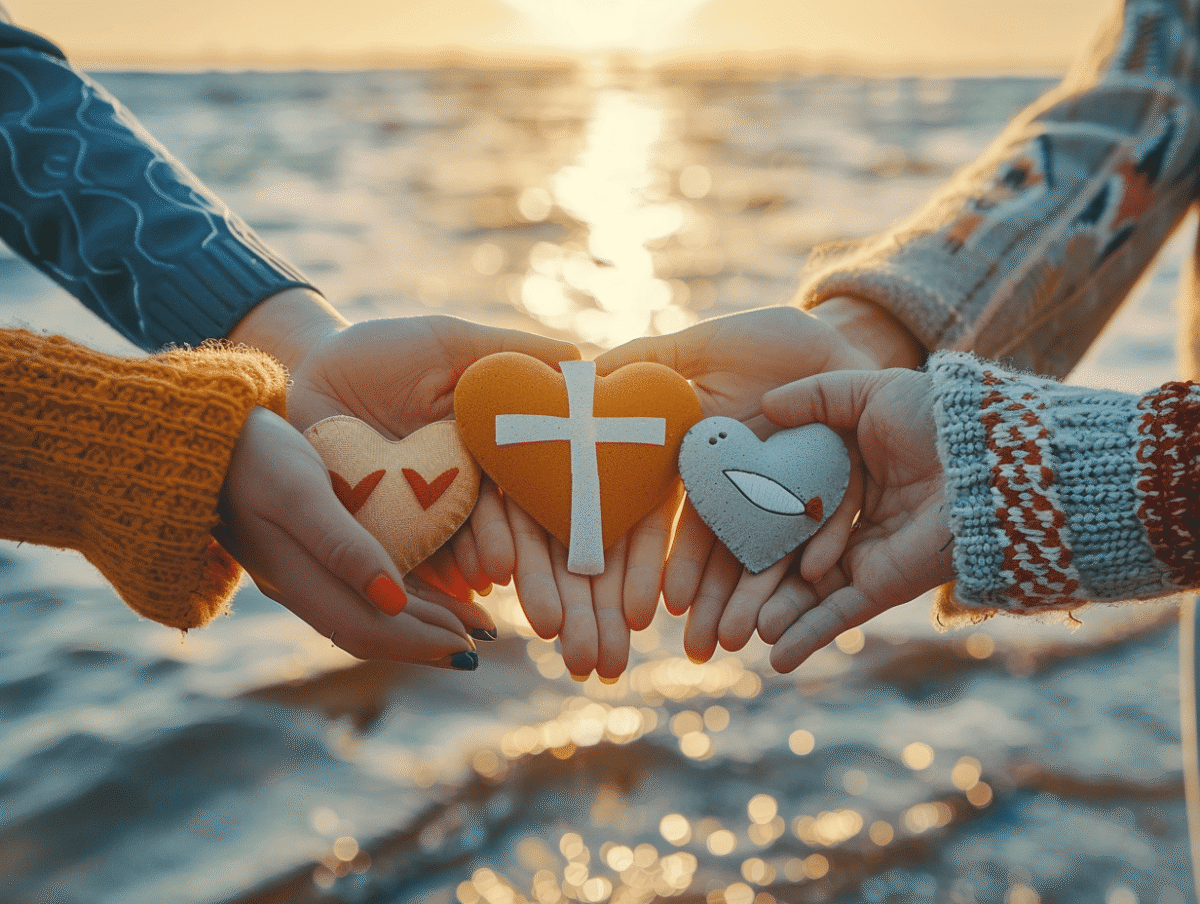
Exploring the subtleties that differentiate the branches of Christianity is like mapping the meanders of a river that is both one and multiple. Believers share a common faith in the teachings of Jesus Christ, but each tradition—whether Catholic, Orthodox, Protestant, or other more recent movements—interprets sacred texts and experiences spirituality in its own way. Divergences can manifest in theology, liturgy, ecclesiastical governance, and worship practices. This mosaic of beliefs and rituals reflects a rich, sometimes tumultuous history shaped by centuries of reforms, schisms, and quests for unity.
The Theological Foundations and Their Expressions in the Different Branches of Christianity
At the heart of what is called Christianity lies a belief in a one God, revealed as trinitarian Father, Son, and Holy Spirit and incarnated in Jesus Christ. It is around this central figure that doctrines and dogmas have diversified according to scriptural interpretations and historical contexts. Foundational texts, such as the Old and New Testaments, are universally recognized, but their exegesis varies substantially. The difference between Christian and Catholic is notably illustrated by the primacy of the pope and the apostolic tradition directly stemming from Peter for Catholicism, while the Orthodox emphasize episcopal collegiality and Protestants prioritize the sole authority of Scripture, rejecting any form of infallible ecclesiastical magisterium.
The early Christian communities, born in the 1st century, gave rise to a profusion of traditions that, while sharing the same essence, express themselves through distinct theological lenses. Catholics, through ecumenical councils and papal declarations, have articulated dogmas such as the Immaculate Conception or the Assumption, which are absent among Orthodox and Protestant groups. The latter, driven by figures such as Martin Luther or John Calvin, have reformulated key doctrines like justification by faith and the universal priesthood. For its part, Orthodoxy maintains a more mystical and sacramental approach, centered on the experience of the divine rather than on precise dogmatic formulations.
The influence of the apostles Peter and Paul remains evident in the structuring of churches. Peter is seen as the first bishop of Rome, a leading figure of the Catholic Church, while Paul, through his epistles, contributed to the spread of Christianity and the definition of its doctrinal contours, impacting all Christian branches. History teaches us that these theological divergences, far from being mere scholarly disputes, have shaped deep religious identities and have sometimes been the breeding ground for political and social upheavals on a global scale.

Practices and Rituals: Diverse Manifestations of the Christian Faith
The Latin rite, the liturgical heart of Catholicism, is distinguished by a language and a set of practices that have traversed the centuries. Sacraments such as baptism or the Eucharist are celebrated with particular solemnity, integrating chants, prayers, and sacred gestures passed down through tradition. Explore the Latin rite to grasp the essence of these ceremonies that punctuate the life of the faithful, from birth to death.
In contrast, the Eastern rite, practiced by Orthodox churches, is characterized by a liturgy imbued with deep symbolism, where icons, light, and incense hold paramount importance. Every gesture, every word is steeped in the quest for the divine, inviting believers to a sensory experience of their faith. The Eastern rite, in its diversity, remains true to its primary vocation: to be the vector of a mystical communion with God.
As for Protestantism, simplicity prevails in religious services, reflecting a theology that advocates a return to the sources of the Gospel and a direct relationship with God. Protestant churches, often devoid of the ornamentation typical of Catholic or Orthodox churches, prioritize the Word, preaching, and the study of sacred texts. This purification of the external forms of religion aims to emphasize the interiority of faith and the individual responsibility of the believer.
The clergy of each confession, whether Catholic, Orthodox, or Protestant, assumes distinct roles in conducting rites and managing communities. The Catholic clergy, hierarchically structured with the pope at its head, contrasts with the Orthodox clergy where authority is shared among patriarchs and bishops. Between these two, the Protestant clergy presents a more egalitarian form, often driven by a collegial and democratic spirit. These organizational differences inevitably reflect in the practices and life of the churches, influencing social ties and the place of the religious community within society.