Designing an interior that is both functional, pleasant, and decorated according to one’s tastes involves considering several parameters. The choice of colors, the organization of space, and lighting are the usual levers. In recent years, the energy performance of the home has also entered the equation: a poorly insulated or poorly ventilated interior remains uncomfortable, regardless of the quality of the furniture.
Energy performance and interior comfort: the link that decor does not resolve
Decorating guides rarely address thermal issues. Yet, it conditions the daily experience in each room. A poorly insulated wall generates a cold wall sensation that leads to overheating, which degrades both comfort and the bill.
Since January 1, 2025, homes rated G on the energy performance certificate (DPE) can no longer be rented at the conclusion, renewal, or extension of a lease. This regulatory constraint also affects owner-occupiers who are considering selling: the energy class impacts the property’s value. Before rethinking the decor of a room, checking the state of the thermal envelope helps avoid redundant work.
To move from a very energy-consuming home to a more efficient class, technical feedback recommends combining envelope insulation, heating improvement, and ventilation. Changing a single piece of equipment is generally not enough. The supported pathway of MaPrimeRénov’ also requires an energy audit and a gain of at least two classes in the relevant cases. Several resources compile practical ideas for combining decoration and layout, such as the website www.breizheo.com for the home, which gathers articles on these topics.
Colors and natural light: adapting the palette to the room
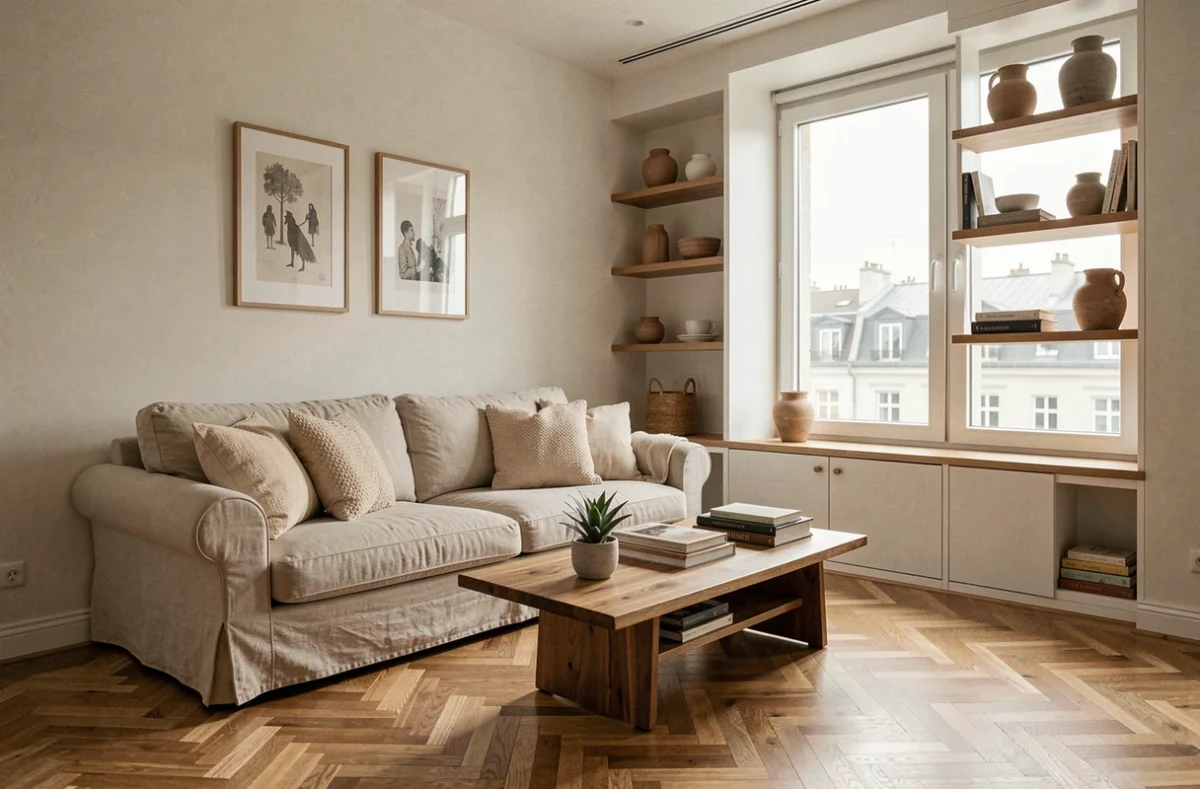
The choice of colors remains the first lever accessible without heavy work. The current trend favors earthy tones, muted greens, and warm off-whites, which work well in north-facing rooms where the light is cooler.
Applying the same color everywhere simplifies the approach, but each room has its own brightness and function. An east-facing bedroom receives morning sunlight that alters the perception of a beige, making it appear more golden, while the same beige will seem dull in a windowless hallway. Testing a sample directly on the wall at different times of the day avoids unpleasant surprises.
Multiplying sources of artificial light
A single ceiling light creates shadowy areas and a flat ambiance. Combining multiple light points (reading lamp, wall sconce, garland on a piece of furniture) allows for modulation of the atmosphere according to use. Warm color temperature bulbs, around 2,700 kelvins, reproduce light similar to that of a setting sun.
Placing a low light source in a dark corner transforms the perception of a room’s volume without any masonry work.
Storage and circulation: the invisible square meters
Lost space often hides in details: a piece of furniture that is too deep blocking a passage, a door that opens the wrong way, a hallway cluttered with shoes. Before buying additional furniture, a precise survey of circulation areas helps make the right choices.
- Low and open furniture (shelves without doors, benches with integrated storage) reduces visual clutter while providing useful storage.
- Maximizing floor space, especially in the entryway and living room, facilitates passage and gives a sense of space greater than the actual area.
- Vertical storage (columns, wall shelves) exploits the ceiling height, often underutilized in older homes.
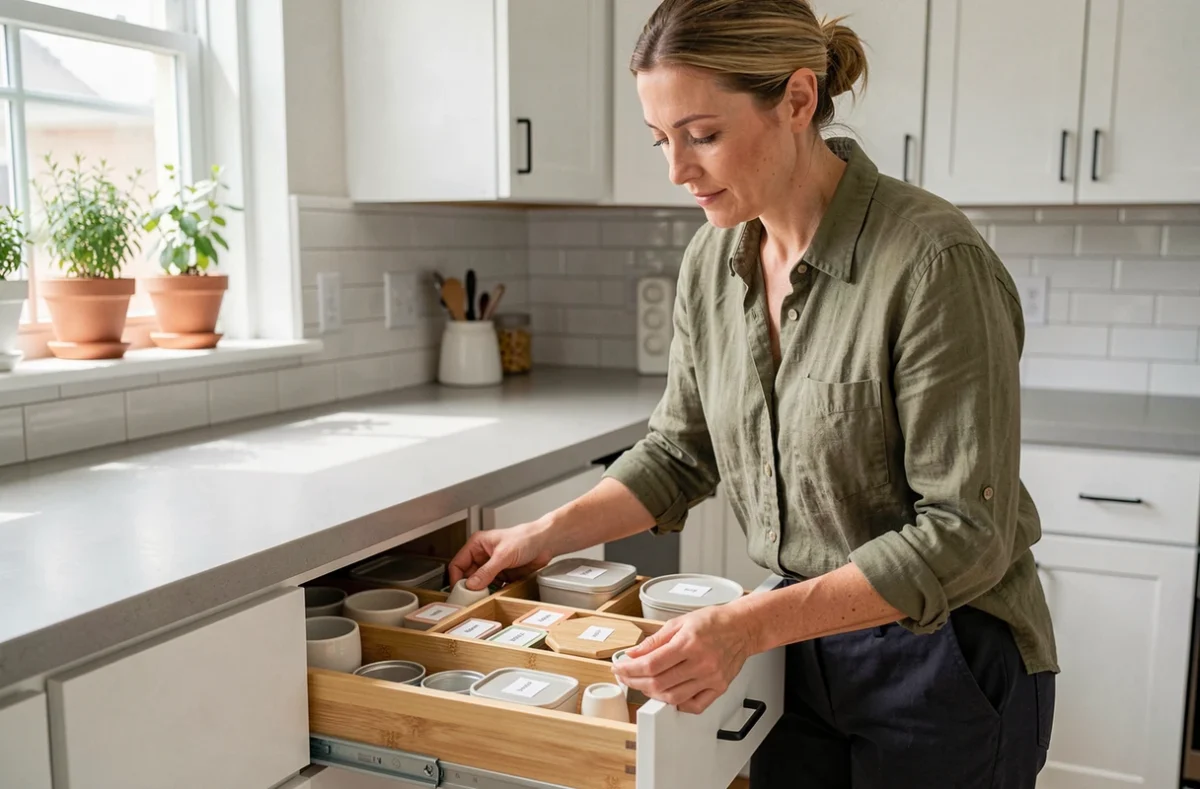
A well-organized interior appears larger than a simply redecorated one. Regularly sorting through accumulated items remains the most effective method, and it costs nothing.
Adapting furniture to the actual use of each room
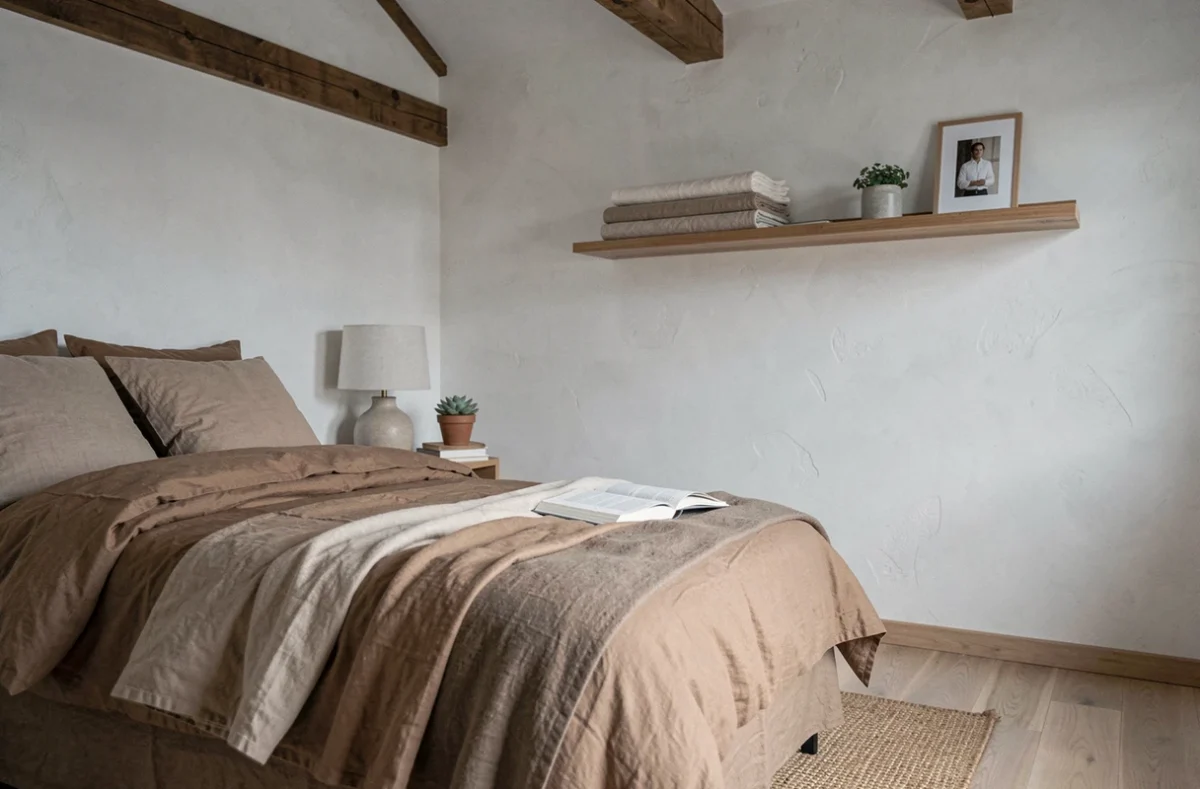
A dining table for eight people in a living room that never hosts more than four guests occupies space unnecessarily. Extendable or modular furniture better meets actual uses. In a bedroom, a bed with integrated storage drawers replaces an additional dresser advantageously.
Field feedback diverges on open kitchens: they visually enlarge the space, but cooking odors and appliance noise spread into the living room. A sliding glass partition or a thick curtain constitutes a compromise that preserves brightness without the acoustic drawbacks.
Plants and materials: creating an ambiance without overloading
Indoor plants bring vibrant color and enhance the feel of a room. Their maintenance varies significantly depending on the species. It’s better to have two plants suited to the actual light of the home than a collection that withers due to lack of light.
Mixing materials (wood, linen, ceramic, metal) adds depth to a monochrome interior. A linen cushion on a synthetic fabric sofa, a stoneware vase on a metal shelf: these texture contrasts effectively replace the accumulation of decorative objects.
- Limiting objects placed on flat surfaces (tables, dressers, windowsills) reduces the feeling of disorder and facilitates cleaning.
- Favoring a few carefully chosen decorative pieces rather than a multitude of small objects creates a more pronounced effect.
- Textiles (curtains, rugs, throws) absorb sound and soften rooms with hard walls and floors, improving daily acoustic comfort.
The collective DPE, now mandatory for all condominiums including those with fifty units or less since January 1, 2026, can also influence layout decisions. An energy-efficient home can be decorated more freely, as constraints related to thermal bridges or humidity are reduced. Considering the building’s envelope before decoration remains the most logical sequence, even if it is rarely presented in this order.