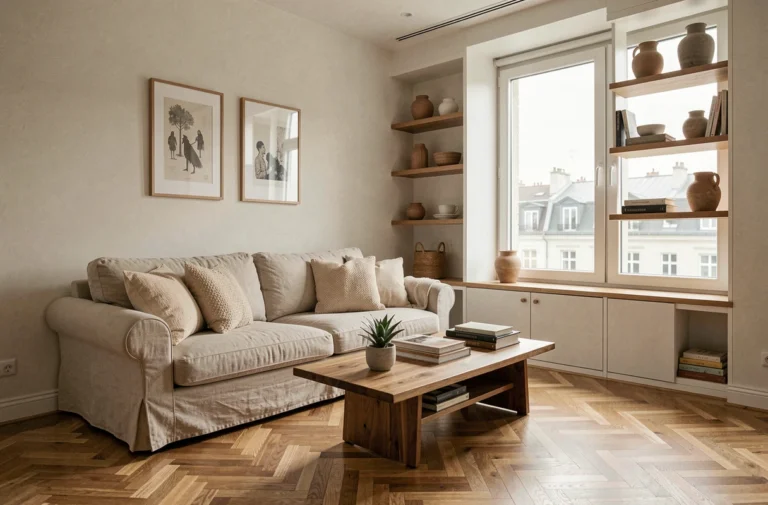
90% of those over 75 in France want to continue their journey at home, according to Drees. The figure is striking, but the reality of staying at home does not bend to simple will: barely a quarter of homes are actually adapted to loss of autonomy. Behind this lifestyle choice lies an organization where human assistance, equipment, paperwork, and shifting regulations intertwine.
For relatives, juggling the systems resembles an endurance sport. Between partial funding, sometimes labyrinthine access to assistance, and a constantly readjusted service offering, it requires perseverance. Government announcements promise to simplify life, but on the ground, each department moves in its own way.
Aging at home: what challenges and expectations do seniors have today?
Staying at home reflects a conscious choice for nearly all seniors. It is not a whim: staying at home, making decisions for oneself, maintaining one’s bearings, and keeping alive connections with others are what occupy the minds of those advancing in age. But living this desire every day raises very concrete questions: how to ensure security when autonomy is eroding, how to face loneliness, or how to push back against the judgments that label based on a birth date?
It is often families that take the first wave of challenges. Adapting the home, coordinating visits from home helpers, preventing falls, preserving mental health: nothing is done randomly, everything counts. But logistics does not explain everything. What is at stake is maintaining quality of life and dignity, without turning the home into a hospital corridor.
Today, seniors’ expectations revolve around three clear needs:
- finding concrete solutions that preserve their autonomy
- benefiting from support tailored to their reality, not to that of a form
- not cutting the thread of social connection or isolating themselves
To navigate this maze, they primarily seek reliable information, understandable procedures, and accessible resources. Online, https://www.infoseniors.net/ gathers references, explains, guides, and updates rights as quickly as regulations evolve.
Finding the right balance in home care for the elderly is a tightrope walk: reassuring without reducing to helplessness, supporting without infantilizing, protecting without imprisoning. No magic wand; only concrete solutions designed to adjust to each new situation.
What concrete solutions exist to preserve autonomy at home?
Staying autonomous at home is not a matter of miracles but of well-established systems. First and foremost, observe every corner of the home: identify obstacles, streamline passages, and install modifications that prevent avoidable accidents. Vigilance around fall prevention is the number one ally of prolonged autonomy.
To support daily life, several services coordinate:
- Home assistance for all practical tasks: home maintenance, laundry, administrative procedures
- Home care, including medical supervision, assistance with bathing, or medication management
- Meal delivery that ensures a balanced diet, preventing frequent malnutrition
There are also concrete actions to improve safety and autonomy:
- Adapting the home to eliminate risks and make strategic areas accessible
- Utilizing the personalized autonomy allowance (APA) to finance necessary interventions
- Encouraging adapted physical activities that maintain fitness and slow dependence
Financial assistance often makes a difference. The APA, provided by the department, covers part of the cost of services based on the level of autonomy. Several local schemes exist to support home adaptation. Here, it is better to anticipate: regular coordination of solutions effectively prolongs quality of life where one has their memories.

Practical tools and useful resources for families and caregivers
Supporting a senior on a daily basis involves a network of resources that one must dare to tap into. Municipal support provides valuable assistance: at the forefront, the communal social action centers (CCAS), which guide towards nearby services, assist with procedures, and connect with other actors. Alongside them, the local information and coordination centers (CLIC) offer individual support, practical advice, and open the door to a circle of seasoned professionals.
Mutual insurance companies and pension funds also intervene in prevention and home transformation: to know where to start, simply contact the town hall or navigate official platforms. Organizing in advance by gathering all documents and medical reports often speeds up the administrative process, which is far from a walk in the park.
To break the solitude, some local initiatives are widely praised:
- Active senior clubs, memory workshops to keep the mind alert
- Exchange groups, intergenerational meetings to weave or reweave connections
Behind a website or an association sometimes lies the solution that changes everything: a door opens, isolation recedes, and daily life lightens. It is essential to be aware of this, as each territory has its discreet treasures.
Aging at home means granting oneself the right to move at one’s own pace, to adjust the balance, and not to let choices be twisted under the weight of time. With every step, a way to continue deciding for oneself.